From Shetland to Ski Slopes: The Fair Isle Sweater's Unexpected American Takeover
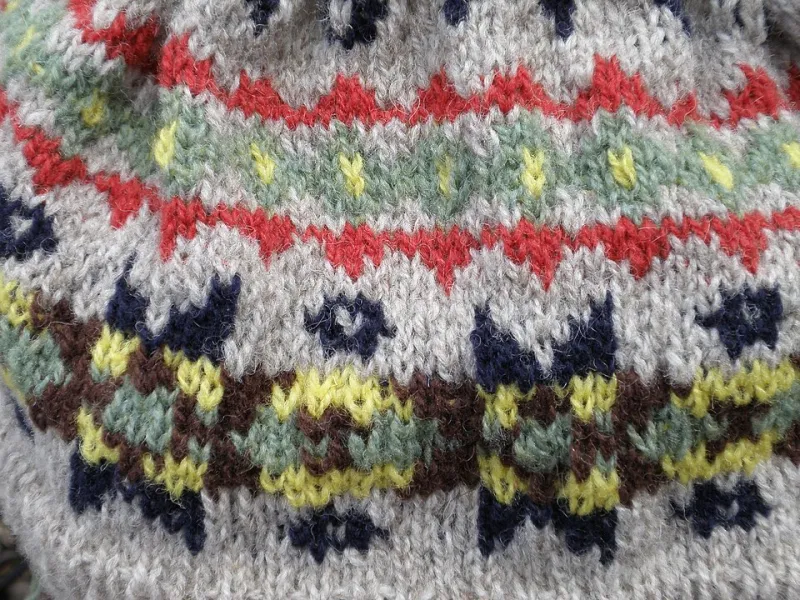
Photo: Amanda Slater from Coventry, West Midlands, UK, CC BY-SA 2.0, via Wikimedia Commons
Let's be honest with each other: a few years ago, the Fair Isle sweater was code for 'your uncle at Thanksgiving.' Today it's the single most requested piece in our inbox every November, spotted on subway platforms in Brooklyn and chairlifts in Jackson Hole alike. That's not a fluke. That's a revival, and it's worth understanding.
A Quick History Lesson
Fair Isle knitting comes from the southernmost of Scotland's Shetland Islands — a windswept speck where, for roughly two centuries, knitters developed a distinctive technique of multicolored geometric patterns worked in stranded yarn. The island's wool trade made the style famous by the 1920s, when no less than the Prince of Wales was photographed wearing one, and British fashion never looked back.
The pattern crossed the Atlantic with immigrants and never entirely left. But its recent explosion? That's something new.
Why Now?
We have a theory, and it's not really about fashion at all. Heritage knitwear spikes during uncertain times — you saw it after 2008, and you're seeing it now. There's something deeply reassuring about a garment that represents patience, tradition, and craft. In a world of fast everything, a sweater with a 200-year-old pattern says: some things last.
There's also the 'grandmillennial' effect. Younger American shoppers are actively seeking pieces with a story, and nothing has a story like a knitting tradition that predates the light bulb.
How to Wear It Without Looking Like a Holiday Card
The line between 'cozy heritage piece' and 'walking Christmas decoration' is real but manageable:
- Limit the palette. A Fair Isle in navy, cream, and rust reads sophisticated. One in red and green with pom-poms reads seasonal greeting. Choose accordingly.
- Keep everything else quiet. The sweater is the statement. Pair it with straight-leg jeans, corduroys, or a simple wool skirt. Resist the urge to add patterned scarves on top.
- Mind the fit. Slightly relaxed is the move — slim-fit Fair Isle looks like a costume. If it's vintage and a touch oversized, even better.
- Go for one, not a head-to-toe look. One patterned knit per outfit. Trust us.
Where to Find the Real Thing
At the top end, Shetland-made originals and heritage American mills like Woolrich-era pieces command prices that reflect genuine craftsmanship. Mid-range, brands like J.Crew, L.L.Bean, and Pendleton reliably produce quality versions between $100 and $200. And thrift stores? Gold mines. Vintage Fair Isle from the '60s and '70s is abundant, affordable, and often better-made than anything new at the price.
Our verdict: this trend has legs — or rather, sleeves. Unlike flashier revivals, Fair Isle never actually went away; it just waited patiently, like all good traditions do. Buy one good sweater, wear it for twenty winters, and hand it down. That's not a trend. That's an heirloom.