Why Your Winter Wardrobe Is Actually Good for Your Mental Health

I want to tell you about a sweater.
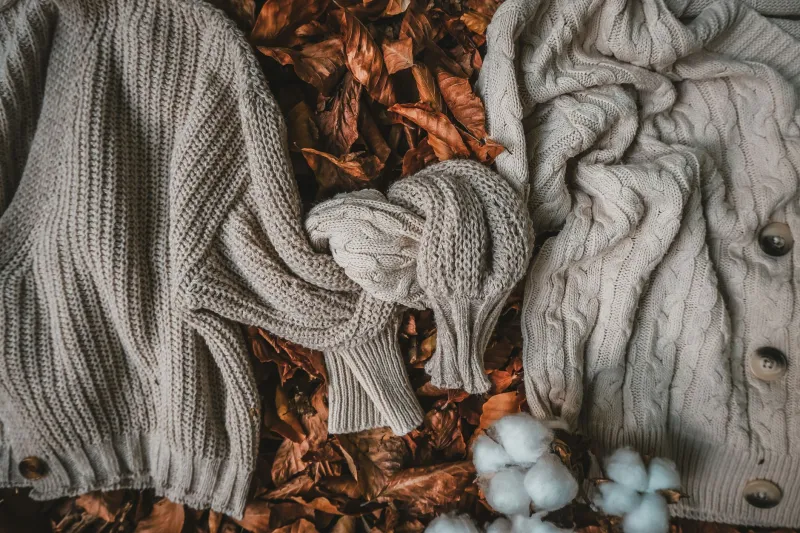
It's a heathered oatmeal crewneck, the kind with a slightly loose fit and cuffs that are just a little too long. I've had it for four winters now. I've worn it on hard days and easy ones, on sick days and snow days and days when the news was too much and I needed something that felt like armor against the world. It's not fancy. It's not expensive. But something about putting it on genuinely makes me feel better.
I used to think that was just me being sentimental about a piece of clothing. Turns out, there's actual science behind it.
The Body-Mind Connection in What We Wear
Fashion psychology — the study of how clothing affects our emotions, behavior, and self-perception — has been a growing field for decades, but it's only recently started getting mainstream attention. Researchers have documented something they call "enclothed cognition": the idea that what we wear influences how we think and feel, not just how others perceive us.
In winter specifically, this effect gets amplified. The season itself is psychologically loaded for a lot of Americans. Shorter days mean less sunlight, which directly affects serotonin production and can trigger Seasonal Affective Disorder (SAD) in an estimated 10 million people in the US, with another 10-20% experiencing a milder "winter blues." When your environment is working against your mood, the things you surround yourself with — including what you put on your body — matter more than usual.
So when you reach for the softest thing in your closet on a gray Tuesday in February, you're not being dramatic. You're self-regulating.
Why Soft Textures Feel Like Safety
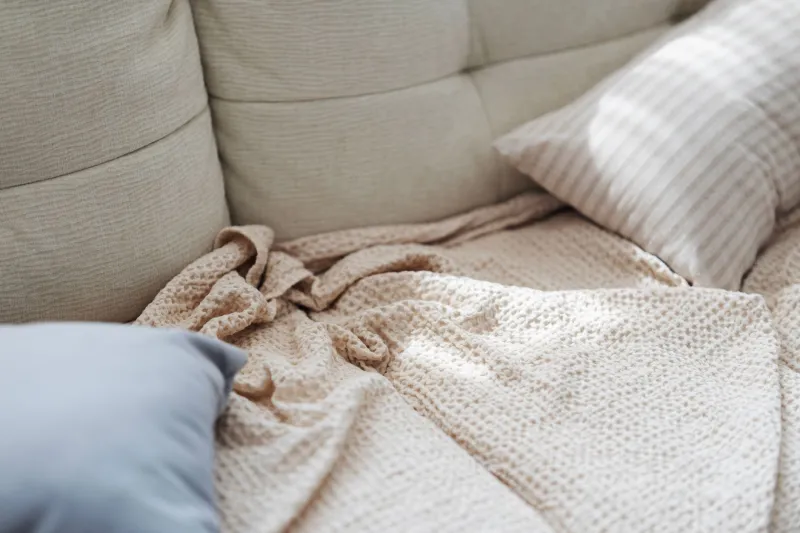
The relationship between touch and emotional comfort starts earlier than most of us remember. Research on tactile comfort consistently shows that soft, warm textures activate the same neural pathways associated with physical safety and care. It's why weighted blankets help with anxiety, why babies are soothed by being swaddled, and why — yes — slipping into a cashmere sweater can genuinely lower your stress response.
Skin is our largest sensory organ, and it's constantly sending information to our brains about our environment. Rough, scratchy, or restrictive clothing signals low-level discomfort that our nervous systems register even when we're not consciously aware of it. Soft, fluid, or gently weighted fabrics do the opposite — they signal ease.
This is one reason why the rise of "comfort dressing" that accelerated during the pandemic has had real staying power. People discovered that wearing soft, loose, tactilely pleasing clothing made them feel measurably better during a high-stress period — and they're not giving that up now that life has theoretically returned to normal. Why would you?
The Quiet Power of Neutral Tones
Winter fashion consistently trends toward muted, earthy palettes — warm creams, dusty taupes, deep forest greens, soft grays, burgundy, camel. This isn't just an aesthetic preference. There's a psychological logic to it.
Color psychology research suggests that muted, low-saturation colors tend to be perceived as calming and grounding, while highly saturated or bright colors activate the nervous system more strongly. In a season when many people are already managing elevated stress, anxiety, or low mood, gravitating toward softer tones is a form of intuitive self-care.
Neutral palettes also create a sense of visual coherence and calm — both in a wardrobe and in a room. When everything works together without clashing, there's a low-grade sense of order that supports rather than taxes the brain. It's the same reason many people find it easier to think in tidy spaces.
This doesn't mean bright colors are bad or that you should drain all the joy from your winter wardrobe. It means paying attention to what your color choices are doing for your mood, not just your outfit. If a deep teal cardigan makes you feel alive and grounded, wear it constantly. If it energizes you in a way that feels good, that's data worth using.
Layering as a Psychological Practice
One of the most distinctly winter style behaviors is layering — and it turns out this has emotional dimensions beyond just staying warm.
Layers give us control over our environment. When you can add or remove a layer in response to how you feel — physically or emotionally — you're exercising agency over your comfort in a very direct way. That sense of control, however small, matters psychologically. Research on autonomy and well-being consistently shows that feeling in control of your environment (even in minor ways) reduces stress and improves mood.
There's also something psychologically protective about layers. A cozy cardigan worn over a fitted top, or a long coat wrapped tightly against the cold, creates a kind of physical boundary between you and the world. Fashion theorists have written about clothing as a form of "second skin" — and in winter, when we're more likely to feel vulnerable (to cold, to darkness, to the general weight of the season), that protective quality becomes more emotionally significant.
Getting Intentional About It
All of this is interesting in the abstract, but the real value is in applying it. If your winter wardrobe is genuinely affecting your mood — and it is, whether you've thought about it consciously or not — then building it with some intention makes sense.
Start by noticing what you actually reach for when you're having a hard day. Not what you think you should wear, not what's technically the nicest thing in your closet — what do you actually grab when you need to feel okay? That item is telling you something important about what genuinely comforts you.
Then, build from there. Invest in more of what actually works for your nervous system. If you feel better in soft, oversized knits, that's not laziness — that's self-knowledge. If a structured coat makes you feel capable and put-together even on low-energy days, that's worth knowing too.
Dress for how you want to feel, not just for how you want to look. In winter especially, those two things should be pointing in the same direction.
The Sweater, Revisited
That oatmeal crewneck I mentioned at the beginning? I finally figured out why it works so well for me. It's soft enough to feel like comfort, structured enough to feel like I'm still showing up, and neutral enough that it goes with everything without requiring any decisions. It asks nothing of me and gives a lot back.
That's what good winter dressing can be — a small, daily act of care for yourself. Not a luxury. Not vanity. Just the quiet acknowledgment that how you feel matters, and the things closest to your skin are worth choosing thoughtfully.
On the coldest days, that's not a small thing at all.